



Turn and Lane-Change Signals
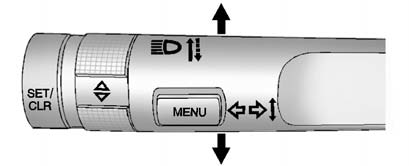
An arrow on the instrument panel cluster will flash in the direction of the turn or lane change.
Move the lever all the way up or down to signal a turn.
Raise or lower the lever until the arrow starts to flash to signal a lane change. The turn signal flashes three times.
The lever returns to its starting position when it is released.
If after signaling a turn or lane change the arrow flashes rapidly or does not come on, a signal bulb may be burned out.
Replace any burned out bulbs.
If the bulb is not burned out, check the fuse. See Fuses and Circuit Breakers for more information.
See also:
Engine Overheating
The vehicle has an indicator to warn of engine overheating.
There is an engine coolant temperature warning light on the vehicle's
instrument panel.
See Engine Coolant Temperature Gauge.
If t ...
Recommended Fluids, Lubricants, and Parts
Recommended Fluids and Lubricants
Maintenance Replacement Parts
Replacement parts identified below by name, part number, or specification can
be obtained from your dealer.
...
General Information
Your vehicle is an important investment. This section describes the required
maintenance for the vehicle. Follow this schedule to help protect against major
repair expenses resulting from neglect ...