



Child Restraint Systems
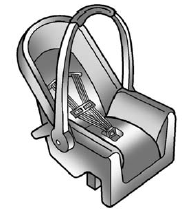
(A) Rear-Facing Infant Seat
A rear-facing infant seat (A) provides restraint with the seating surface against the back of the infant.
The harness system holds the infant in place and, in a crash, acts to keep the infant positioned in the restraint.

(B) Forward-Facing Child Seat
A forward-facing child seat (B) provides restraint for the child's body with the harness.
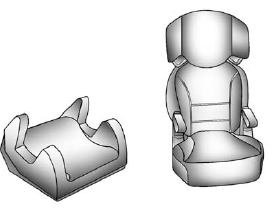
(C) Booster Seats
A booster seat (C) is a child restraint designed to improve the fit of the vehicle's safety belt system.
A booster seat can also help a child to see out the window.
See also:
Automatic Fold and Tumble Feature
The transmission must be in P (Park) for this feature to work.
WARNING
Automatically folding and tumbling the seat when someone is sitting in the seat,
could cause injury to the person sittin ...
Maintenance Schedule
Owner Checks and Services
At Each Fuel Stop
- Check the engine oil level.
See Engine Oil.
Once a Month
- Check the tire inflation pressures. See Tire Pressure.
- Inspect the tires fo ...
Shoulder Belt Height Adjuster
The vehicle has a shoulder belt height adjuster for the driver and right
front passenger seating positions.
Adjust the height so that the shoulder portion of the belt is on the
shoulder and not f ...