



Removal and Installation of the Sealant Canister
To remove the sealant canister:
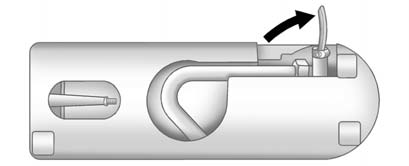
1. Unlock the air only hose (F) from the tire sealant canister (B) by pulling up on the lever.
2. Pull the air only hose (F) from the tire sealant canister (B).
3. Unwrap the sealant/air hose (G) from the compressor (A).
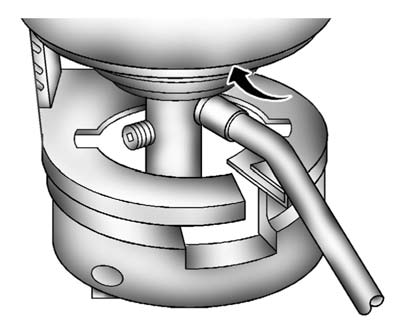
4. Turn the tire sealant canister (B) so the inflator filling hose is aligned with the slot in the compressor.
5. Lift the tire sealant canister (B) from the compressor and replace with a new sealant canister. See your dealer for more information.
To install a new sealant canister:
1. Align the sealant/air hose (G) with the slot in the air compressor.
2. Push the tire sealant canister (B) down and turn it clockwise.
3. Wrap the sealant/air hose (G) around the air compressor channel to stow it in
its original location.
4. Push the air only hose (F) onto the sealant canister inlet and push the lever
down.
See also:
Compass Zone
The zone is set to zone eight. If you
do not live in zone eight or drive out
of the area, the variance needs to
be changed to the appropriate zone.
To adjust for compass variance,
use the fol ...
Guidelines
The RVC system has a guideline overlay that can help the driver align the vehicle
when backing into a parking spot.
To turn the guidelines on or off:
1. Make sure that URPA has not been disabled.
...
Cargo Management System
To open the cargo management system, press the rear of the handle to unlatch
it and then lift the handle up.
A prop rod locks to hold the cover up when opened.
Four hooks are located on ...