



When It Is Time for New Tires
Factors such as maintenance, temperatures, driving speeds, vehicle loading, and road conditions affect the wear rate of the tires.
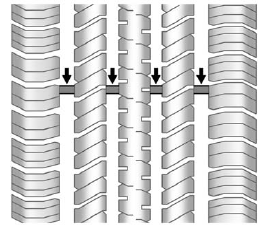
Treadwear indicators are one way to tell when it is time for new tires.
Treadwear indicators appear when the tires have only 1.6mm (1/16 in) or less of tread remaining. See Tire Inspection and Tire Rotation for more information.
The rubber in tires ages over time.
This also applies for the spare tire, if the vehicle has one, even if it is never used. Multiple conditions including temperatures, loading conditions, and inflation pressure maintenance affect how fast aging takes place. Tires will typically need to be replaced due to wear before they may need to be replaced due to age. Consult the tire manufacturer for more information on when tires should be replaced.
Vehicle Storage
Tires age when stored normally mounted on a parked vehicle.
Park a vehicle that will be stored for at least a month in a cool, dry, clean area away from direct sunlight to slow aging. This area should be free of grease, gasoline, or other substances that can deteriorate rubber.
Parking for an extended period can cause flat spots on the tires that may result in vibrations while driving. When storing a vehicle for at least a month, remove the tires or raise the vehicle to reduce the weight from the tires.
See also:
Instrument Panel Illumination Control
The brightness of the instrument panel lights and steering wheel controls
can be adjusted.
(Instrument Panel Brightness): Move and hold the thumbwheel up or down
to brighten or dim the lights ...
Windshield Washer
Pull the windshield wiper lever toward you to spray windshield washer fluid
and activate the wipers. The wipers will continue until the lever is released
or the maximum wash time is reached.
When ...
Off-Road Driving
All-wheel-drive vehicles can be used for off-road driving. Vehicles without all-wheel
drive and vehicles not equipped with All Terrain (AT) or On-Off Road (OOR) tires
must not be driven off-road e ...