



Windshield Wiper/Washer
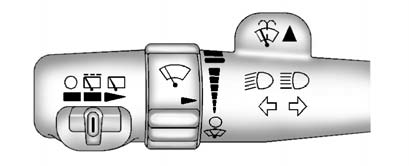
The front wiper control is located on the turn and lane-change lever.
Turn the band with the wiper symbol to control the windshield wipers.
 (Mist): For a single wipe, turn to
 , then release.
For several wipes, hold the band on
 longer.
 (Off): Turns the windshield wipers
off.
(Off): Turns the windshield wipers
off.
 (Adjustable Interval Wipes): Turn
the band up for more frequent wipes or down for less frequent wipes.
(Adjustable Interval Wipes): Turn
the band up for more frequent wipes or down for less frequent wipes.
 (Low Speed): Slow wipes.
 (High Speed): Fast wipes.
Clear ice and snow from the wiper blades before using them. If frozen to the windshield, carefully loosen or thaw them. Damaged wiper blades should be replaced. See Wiper Blade Replacement .
Heavy snow or ice can overload the wiper motor. A circuit breaker will stop the motor until it cools down.
Windshield Washer
 WARNING
In freezing weather, do not use the washer until the windshield is warmed. Otherwise the washer fluid can form ice on the windshield, blocking your vision.
 (Washer Fluid): Push the paddle
at the top of the multifunction lever, to spray washer fluid on the windshield.
The wipers clear the window and then either stop or return to the preset speed.
(Washer Fluid): Push the paddle
at the top of the multifunction lever, to spray washer fluid on the windshield.
The wipers clear the window and then either stop or return to the preset speed.
See also:
Flash-to-Pass
The flash—to—pass feature works with the low beams or Daytime Running Lamps
(DRL) on or off.
To flash the high beams, pull the turn signal/lane change lever all the way
toward you, then release i ...
Safety
Six airbags, including seat-mounted side-impact airbags for the front
passengers and side curtain-type airbags that protect outboard front and rear
occupants, are standard. All-disc antilock brake ...
Manual Operation
(Fan Control): Press the up or down
arrows to increase or decrease the fan speed Pressing this button when the system
is off will turn the system on.
Pressing either arrow while using automatic ...