



Engine Oil Pressure Gauge
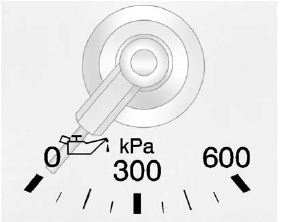
Metric
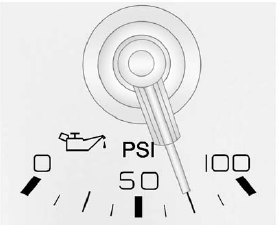
English
For vehicles with an engine oil pressure gauge, it shows the engine oil pressure in kPa (kilopascals) or psi (pounds per square inch) when the engine is running.
Oil pressure may vary with engine speed, outside temperature, and oil viscosity, but if readings are outside the normal operating range, the oil pressure light will come on.
See Engine Oil Pressure Light for more information.
A reading outside the normal operating range may be caused by a dangerously low oil level or some other problem causing low oil pressure. Oil should be checked as soon as possible. See Oil Pressure Low Stop Engine under Engine Oil Messages and Engine Oil.
WARNING!
Do not keep driving if the oil
pressure is low. The engine can
become so hot that it catches fire.
Someone could be burned. Check
the oil as soon as possible and
have the vehicle serviced.
Notice: Lack of proper engine oil
maintenance can damage the
engine. Driving with the engine
oil low can also damage the
engine. The repairs would not be
covered by the vehicle warranty.
Check the oil level as soon as
possible. Add oil if required,
but if the oil level is within the
operating range and the oil
pressure is still low, have the
vehicle serviced. Always follow
the maintenance schedule for
changing engine oil.
See also:
Climate Controls
The heating, cooling, and ventilation for the vehicle can be controlled with
this system.
A. Fan Control
B. Power
C. AUTO (Automatic Operation)
D. ZONE
E. Defrost
F. Air Delivery Mode Con ...
Ignition Positions
The ignition switch has four different positions.
To shift out of P (Park), the ignition must be in ON/RUN or ACC/ ACCESSORY and
the regular brake pedal must be applied.
A (STOPPING THE ENGINE/ ...
Removing the Fence
Unlock by turning both latches (A) to align with the arrow on the
adapter (B). Lift and remove the fence. ...