



Cruise Control
WARNING!
Cruise control can be dangerous
where you cannot drive safely at
a steady speed. So, do not use
the cruise control on winding
roads or in heavy traffic.
Cruise control can be dangerous
on slippery roads. On such roads,
fast changes in tire traction can
cause excessive wheel slip, and
you could lose control. Do not use
cruise control on slippery roads.
With cruise control, a speed of about 40 km/h (25 mph) or more can be maintained without keeping your foot on the accelerator. Cruise control does not work at speeds below about 40 km/h (25 mph).
When the brakes are applied, the cruise control turns off.
If the vehicle has the Stabilitrak® system and begins to limit wheel spin while you are using cruise control, the cruise control will automatically disengage. See StabiliTrak® System.
When road conditions allow you to safely use it again, the cruise control can be turned back on.
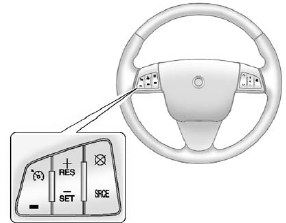
CTS Shown, CTS–V Similar
The cruise control buttons are located on the left side of the steering wheel.
 (On/Off): Turns the system on
or off. The indicator light on the
button turns on when cruise control
is on.
(On/Off): Turns the system on
or off. The indicator light on the
button turns on when cruise control
is on.
+RES (Resume/Accelerate):
Press briefly to make the vehicle resume to a previously set speed, or press and hold to accelerate.
−SET (Set/Coast): Press to set the speed and activate cruise control or make the vehicle decelerate.
 (Cancel): Press to disengage
cruise control without erasing the
set speed from memory.
(Cancel): Press to disengage
cruise control without erasing the
set speed from memory.
See also:
Vehicle Overview
Cadillac's Escalade ESV offers more room for those who find the Escalade, a
full-size SUV, just a bit too small. Its wheelbase is 14 inches longer than the
full-size Escalade, and its total length ...
Windshield Washer
WARNING!
In freezing weather, do not use
the washer until the windshield
is warmed. Otherwise the
washer fluid can form ice on the
windshield, blocking your vision. ...
OnStar Overview
If equipped, this vehicle has a comprehensive, in-vehicle system that can connect
to a live Advisor for Emergency, Security, Navigation, Connection, and Diagnostic
Services.
The OnStar system s ...