



Roof Rack System
WARNING
If something is carried on top of the vehicle that is longer or wider than the
roof rack—like paneling, plywood, or a mattress—the wind can catch it while the
vehicle is being driven. The item being carried could be violently torn off,
and this could cause a collision and damage the vehicle. Never carry something
longer or wider than the roof rack on top of the vehicle unless using a GM
certified accessory carrier.
For vehicles with a roof rack, the rack can be used to load items.
For roof racks that do not have crossrails included, GM Certified crossrails can be purchased as an accessory. See your dealer for additional information.
Notice: Loading cargo on the roof rack that weighs more than 100 kg (220 lbs) or hangs over the rear or sides of the vehicle may damage the vehicle. Load cargo onto the roof rack so that it rests evenly between the siderails, making sure to fasten cargo securely.
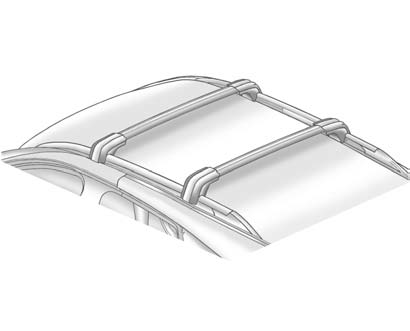
To prevent damage or loss of cargo when driving, check to make sure crossrails and cargo are securely fastened. Loading cargo on the roof rack will make the vehicle’s center of gravity higher. Avoid high speeds, sudden starts, sharp turns, sudden braking, or abrupt maneuvers; otherwise it may result in loss of control. If driving for a long distance, on rough roads, or at high speeds, occasionally stop the vehicle to make sure the cargo remains in its place. Do not exceed the maximum vehicle capacity when loading the vehicle. For more information on vehicle capacity and loading, see Vehicle Load Limits.
See also:
Exterior
Built on the same platform as the Chevrolet Suburban and GMC Yukon XL, the
Escalade ESV stretches 20.4 inches longer than the regular Escalade. Fourteen of
those inches go to extending the wheelba ...
Shutting the Engine Off After a Remote Start
To cancel a remote start, do any of the following:
- Press until the parking lamps turn off.
- Turn on the hazard warning flashers.
- Turn the vehicle on and then back off. ...
2008 Cadillac Escalade Review
After a week in the all-new Cadillac Escalade I have now reviewed each of
GM's full-size SUVs, including the Chevy Tahoe and GMC Yukon. The Escalade is
the top fish in the pond, complete with a mo ...